
finance


We work with a wide range of lenders to help businesses access finance solutions tailored to their individual circumstances.
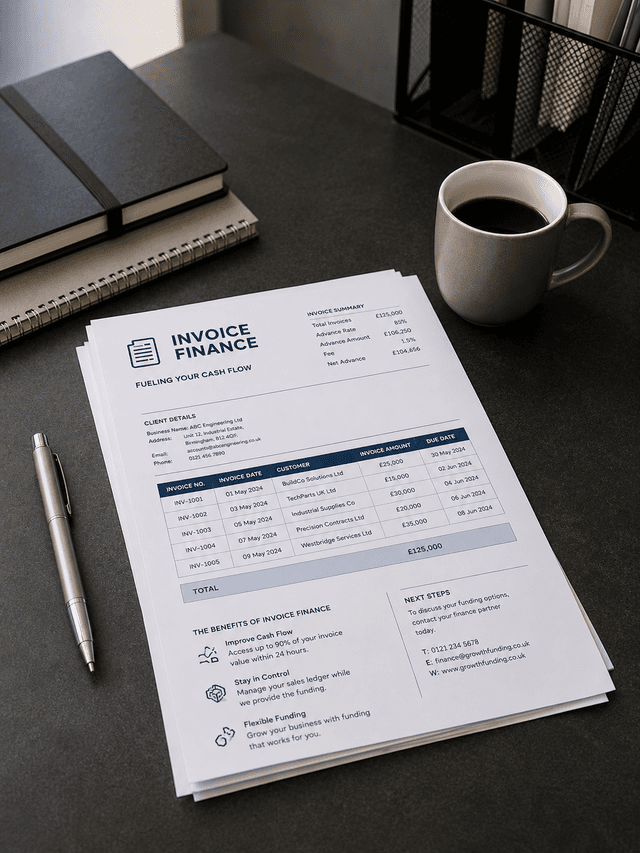
Invoice finance is a type of business funding that allows a company to access money tied up in unpaid customer invoices instead of waiting for payment. Invoice finance can help businesses manage cash flow, cover operating expenses, purchase stock, pay suppliers and support business growth. The amount of funding available and the terms will typically depend on factors such as the value of eligible invoices, customer creditworthiness, the business's financial position and the provider's lending criteria.
Invoice finance works by allowing businesses to unlock a portion of the value of their unpaid invoices before customers settle them. The provider advances funds against eligible invoices and releases any remaining balance after payment, minus applicable fees.
The finance provider advances an agreed percentage of eligible invoice values, helping your business access cash sooner.
When your customer pays the invoice, the funds are used to settle the amount advanced and any applicable charges.
With factoring, the provider typically manages customer collections. With invoice discounting, your business generally retains control of collections.
Depending on your agreement, you may finance further eligible invoices as your business makes sales and issues new invoices.
Invoice finance can suit UK businesses that sell goods or services to other businesses on credit and need access to cash before invoices are paid. It may be available to limited companies, sole traders and partnerships, depending on the provider's eligibility criteria.
Invoice finance is offered by a range of specialist lenders, banks and alternative finance providers in the UK. These providers help businesses access funds tied up in unpaid customer invoices, improving cash flow without waiting for customers to settle their bills.
Before choosing a provider, businesses should compare more than just the amount of funding available. Important factors include:
Invoice finance can suit UK businesses that sell goods or services to other businesses on credit and need access to cash before invoices are paid. It may be available to limited companies, sole traders and partnerships, depending on the provider's eligibility criteria.
Deliver your goods or services and issue invoices with agreed payment terms.
Submit unpaid invoices to the finance provider for assessment and approval.
Receive an agreed percentage of the invoice value before your customer pays.
Your customer pays the invoice, either to the provider or through your business, depending on the arrangement.
The provider deducts the advance and applicable fees, then releases any remaining balance to your business.
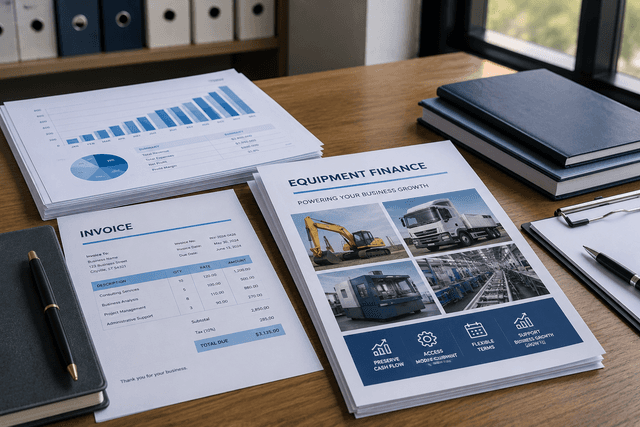
An unsecured business loan isn't the only way to fund a business. Depending on your funding requirements, financial position and eligibility, other forms of business finance may be worth considering.
Invoice finance can be useful for businesses that struggle with cash flow because customers take time to pay. It provides access to funds tied up in unpaid invoices, helping cover payroll, supplier payments and operating costs. However, businesses should compare fees, contract terms and potential effects on customer relationships before choosing a provider.
Funding may be available within a few days once an application has been approved and the provider has completed its checks. The exact timeframe depends on the complexity of your application, invoice verification and the lender's processes.
You may qualify if your business supplies goods or services to other businesses and issues invoices with agreed payment terms. Providers typically assess your outstanding invoices, customer creditworthiness, trading history and financial position. Eligibility criteria vary between lenders.
Yes, some providers offer invoice finance to startups and newer businesses. Approval usually depends on having eligible invoices and customers with a suitable credit profile. A limited trading history may affect the options available, so requirements should be checked with individual providers.
It depends on the type of invoice finance you choose. With invoice factoring, the provider typically manages collections and customers are usually aware of the arrangement. Invoice discounting can allow your business to manage collections itself, and some facilities are confidential, subject to the provider's terms.
The outcome depends on whether your agreement is recourse or non-recourse. With recourse invoice finance, your business will generally have to repay the advance or replace the unpaid invoice. Non-recourse facilities may cover certain customer insolvency risks, but exclusions and conditions apply.
Invoice finance releases funds against eligible unpaid invoices, with the amount available often changing as your sales and invoices change. A business loan provides an agreed sum that is usually repaid through scheduled instalments. Invoice finance may suit businesses with regular B2B invoices, while a loan may be more suitable for a specific investment or upfront expense.
Regulation depends on the provider, the product and the customer involved. Not every invoice finance agreement is regulated in the same way, so businesses should check the provider's status, contractual terms and any applicable protections before entering an agreement.
Check your eligibility in 30 seconds without affecting your credit score.